Showing posts with label Cinematography Courses. Show all posts

Monday, 23 May 2022

Cinematography: All You Need To Know About This Cinema Discipline

Cinema is the most popular and diverse sector, with several employment opportunities. It is an artistic discipline that uses conversation, editing, scene organization, light, sound, and décor to create a film. Cinema is more than just the convergence of art and technology. It is a reliable means of communication. The civilization that produces film both influences and is impacted by it. Cinema is an alive, collaborative social experiment in which we all participate, and it also has a certain allure.

Being a cinematographer is a prerequisite to being creative and being able to look at things from a different perspective. They should also pay key attention to detail. In the top ten films and cinema institute list, AAFT School of Cinema tops the list. One can pursue a diploma in cinematography from the institute or can opt for a certificate in cinema with various specializations. The school also has UG and PG Degrees.

Pursuing cinematography courses will open many opportunities and options for you. It is a popular career choice for people who are creative and enthusiastic about cinematography. The applicant must have good communication skills, artistic talent, be organized, have leadership abilities, be able to communicate stories both written and visually, and know how to operate in a team.

After completion of cinematography courses in Noida, the aspirant will then be able to ensure the visual style and approach of the film are chosen. The camera arrangement for each shot is done correctly, specifies the lighting for each scenario, and Choosing the suitable location, and they should be able to enhance vision and brainstorm ideas.


The General Eligibility Criteria for pursuing a cinematography course are as under, although they may vary from institution to institution:

Diploma courses in cinematography:

Students interested in taking cinematography diploma courses must have received a minimum of 50% in higher secondary school from a recognized board or university.

For undergraduate courses:

Students must have passed their 12th-grade test with a minimum of 50% from an Indian recognized board. Entrance tests and clear personal interview or group discussion rounds may be required of students.

For postgraduate courses:

Students seeking admission to postgraduate cinematography programs must have completed a graduate-level test in a relevant field with a minimum aggregate score of 55 percent or equivalent from an Indian institution or university.

Monday, 25 October 2021

Skills Required To Be A Cinematographer Or Filmmaker

Do you think you have a creative mind with a clear vision to imagine extraordinary scenarios? Then, Cinematography Courses in India are certainly for you. Each shot in the filmmaking needs an accuracy level in every sense, whether it is an ambient sound or color scheme of the set. By and large, what a producer requires is an eye for detail. If you have those keen detailing skills, you can master the world of cinema. Even if you don't possess them, then definitely you can again those by doing Cinematography Courses. There are various skills that are aligned with the profession of a cinematographer that can be learned, as follows:

●       Inventiveness

A result of creative minds and the desire to communicate it by getting every one of the characters alive, that is filmmakers' specialty, they revive stories through their innovativeness. There are numerous perspectives that a director can hold and each one of them brings out a masterpiece.

●       Vision

It's the producer who knows precisely what the crowd will see when the film is out. Thus, the lucidity of what the story is, the place where it will head, how it will be performed by different specialists, and so forth are every one of the pieces of the movie producer's obligations. He must be well versed with the knowledge of technical and reality amalgamation.

●       Narrating abilities

Frequently, motion pictures don't become famous in light of the fact that they need appropriate conveyance. The thing that an expert producer requires is extravagant narrating abilities to guarantee that every one of the contemplation, discourses, characters, activities, scenes, head in unidirectional form and convey one story.

●       Setting Look and Feel

The meticulous filmmaking career requires outwardly engaging situations, foundations, and sets. This is the place where the factor of feeling comes to play and as you complete your course in filmmaking, you will consequently foster it every day with each practical activity you do.

●       Critical thinking abilities

It's no question that in the filmmaking business from time to time, a few situations will come up that should be handled by the producers. Here's the place where critical thinking abilities will guarantee that the creation goes flawlessly.

In order to grab such skills, one must do a degree or Diploma in Cinematography from the top institutes like AAFT where they can brush up their existing abilities and gain more practical exposure. 

Monday, 21 December 2020

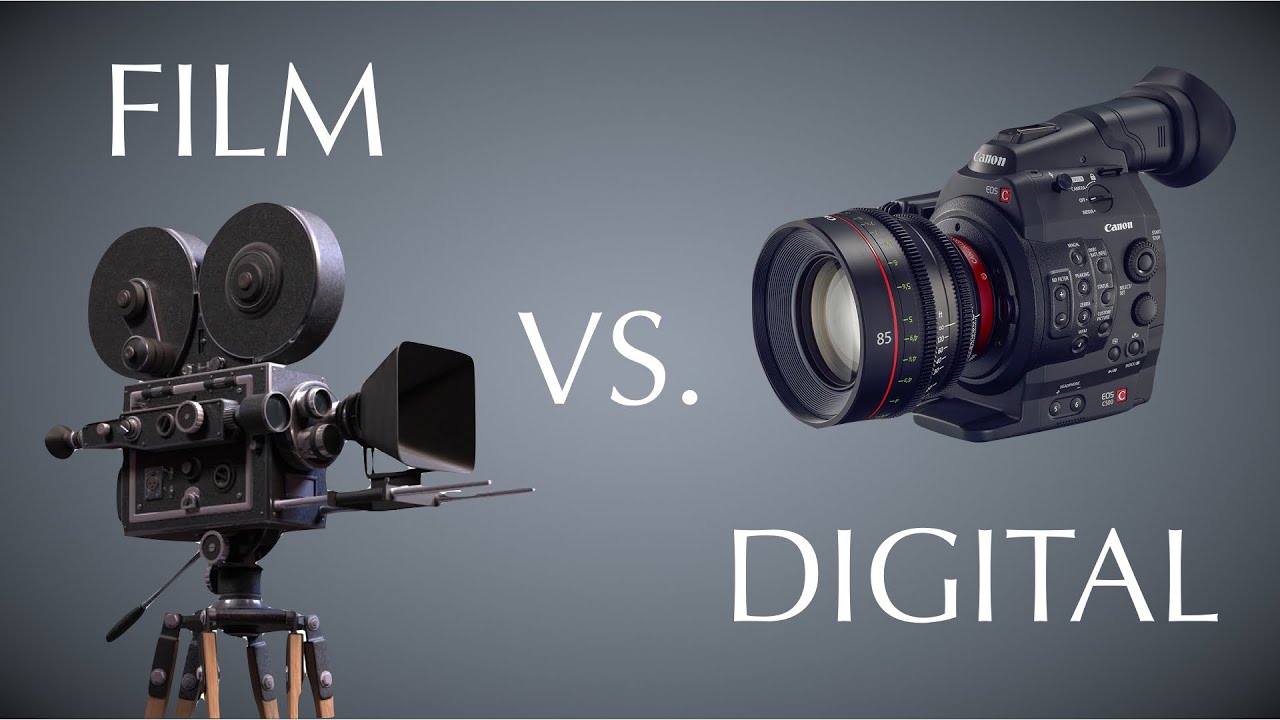
Digital V/S Analogue Technology

 In today’s fast paced world, where everything happens at the click of a button, digital cameras have turned out to be a real advantage.  The technology has replaced heavy, bulky camera equipment and long, tedious film developing processes that were not just time consuming but also heavy on the pocket. Digital cameras are credited for taking the art of photography to the masses, which was once restricted to the technically sound people only.

Digital cameras produce digital images that can be stored in a computer and displayed on screen. In addition, editing of digital data is easy, and a lot of experiments can be done for creativity with numerous editing softwares.

While digital technology has made life much easier, still professional photographers prefer analogue cameras, primarily for better picture quality. Analogue photography refers to clicking photos using an analogue camera and film. In a digital camera, the resolution is determined by counting the number of pixels within a given area, whereas in a film camera, analysis of a film’s resolving power is calculated through angular resolution. Such technical knowledge and training is necessary for ones who are interested in this field. Film and television institute AAFT of Marwah Studios is one such platform that provides a full-fledged technical training on both Digital and Analogue through its cinematography courses.

Talking about the comparison between the two forms of photography, digital photos have less noise/grain than film. Whereas, traditional film photography forces the photographer to plan a shot and execute it well. In fact, a large format film is still the best choice for landscape photography, and given in the right hands, photos from film are superior to digital ones. Prints made from digital photos on home photo printers don't have the shelf life of professional prints made from film. Also, digital photos are more susceptible to manipulation. The film school of Marwah Studios, AAFT School of Cinema has come a long way in imparting advanced knowledge of Digital and Traditional photography.

Despite their respective advantages and disadvantages, digital and traditional photography are complementary arts. They have their respective places in the lives of amateur and professional photographers, and while the transition to digital technology is here to stay, there will always be takers for film cameras, who look for a more personal and enjoyable experience.

Thursday, 7 May 2020

Step into the Cinematography Industry with Requisite Skill-Sets

Cinematography is a vital aspect of film making process without which any motion picture would be incomplete. It is associated with determining the overall look and feel of the movie along with ensuring technical requirements for the same. This industry is witnessing tremendous rise in terms of both, opportunities as well as productivity. Film makers prefer professionals with prior understanding of the industry and the field. The increasing demand of skilled experts has also resulted in the rise of cinematography courses in India. Interested aspirants must choose a learning program after thorough contemplation since this decision can break or make their career.

Adequate academic qualification also helps students to gain comprehensive understanding of the interrelation among different disciplines and the industry as a whole. This helps them to develop skills through which they can become competent for undertaking various roles and responsibilities with utter professionalism and proficiency. These education programs can be joined right after completing 12th. This would help them to gain industry knowledge at an early phase. They can learn camera operations and techniques such as different types of angles, movements, shot types, lighting, aperture, exposure, focus, etc. In-depth knowledge of all such aspects allow them to analyze and determine the combination of principles & techniques that could bring the best out of the scene/ sequence to be shot.

AAFT School of Cinema is among top institutes in Noida that has created flagship in facilitating wide range of industry-oriented film making courses. Interested aspirants can pursue B.Sc. or M. Sc. in Cinema with specialized diploma in Cinematography. Its state-of-the-art infrastructure facilities, like high-end film studios, shooting floor, professional shooting cameras, cranes, trolley and other equipment, provide a platform through which students can develop practical skills. This helps them to become acquainted with the real industry work environment and operations